How to Build a Morning Wellness Routine That Actually Sticks
I’ve failed at morning wellness routines more times than I can count. The 5am wake-up. The two-hour miracle morning. The cold shower followed by journaling followed by a green smoothie followed by somehow still being late for work. None of it stuck.
What did stick was building something small enough that I couldn’t talk myself out of it. My current morning routine takes about 25 minutes. Some days it takes 15. It’s not glamorous. But I’ve done it almost every morning for the past two years, and that consistency has changed more than any elaborate plan ever did.
Why Morning Matters
I’m not going to lecture you about circadian rhythms. The simple version: how you start your morning sets the emotional tone for the rest of the day. If the first thing you do is check your phone and absorb a bunch of other people’s urgency, you spend the day reactive. If the first thing you do is something intentional and quiet, you spend the day a little more grounded.
That’s it. That’s the whole argument.
My Routine (The Real One)
Phase 1: No Phone (5 minutes)
I wake up. I do not check my phone. This is the hardest part.
The phone stays on the nightstand (not in my hand) while I get up, use the bathroom, splash water on my face, and make coffee or tea. These five minutes of doing ordinary things without a screen are more valuable than any fancy wellness hack.
If you take one thing from this post, make it this: delay your phone by 20 minutes after waking. The National Institute of Mental Health has published research on how early screen exposure affects anxiety levels throughout the day. It’s not a small effect.
Phase 2: Meditation or Breathwork (10 minutes)
I sit on a cushion in my bedroom corner and meditate. Sometimes it’s a standard mindfulness sit — watching the breath, noticing thoughts, returning. Sometimes I do a few rounds of box breathing or alternate nostril breathing if I woke up anxious.
Ten minutes. Timer set. Nothing fancy.
If you don’t have a meditation practice yet, the beginner’s guide I wrote covers exactly how to start. And if you want breathwork options instead, the breathing techniques post has five options depending on what you need.
Phase 3: Movement (5-10 minutes)
Not exercise. Movement.
Some days this is a few sun salutations. Some days it’s a walk around the block. Some days it’s literally just stretching in my kitchen while the kettle boils. The bar is low on purpose. If I set it at “30-minute workout,” I’d skip it four days out of five. If I set it at “move your body for five minutes,” I do it every day.
Good resources for quick morning movement: Yoga with Adriene on YouTube has tons of free 10-15 minute routines. She’s not annoying about it, which matters.
Phase 4: Intention (2 minutes)
This is the part that sounds the woo-woo-iest but is actually the most practical. I ask myself one question: What’s the one thing that matters most today?
Not a to-do list. Not five priorities. One thing. I write it on a sticky note and put it on my laptop. That’s my North Star for the day. Everything else is secondary.

How to Make It Stick
Start Smaller Than You Think
If 25 minutes sounds like a lot, start with 10. Or 5. Or just the “no phone” phase. The point isn’t to build the perfect routine on day one. The point is to build something you’ll do tomorrow, and the day after that, and the day after that.
Anchor It to Something You Already Do
Habit stacking works. My meditation happens after I brush my teeth and before I make coffee. I don’t have to decide when to meditate — the decision was made once and it just runs automatically now.
Prepare the Night Before
Lay out your clothes. Set your cushion where you’ll see it. Put your phone charger in another room. The fewer decisions you have to make at 6am, the more likely you are to follow through.
Track It (Simply)
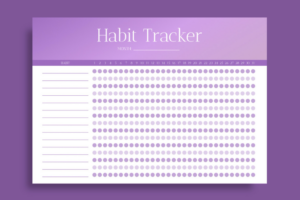
I use a paper calendar with an X for each day I complete the routine. Apps work too. The method doesn’t matter — what matters is seeing the streak and not wanting to break it.
Let It Be Imperfect
Some mornings I skip the movement. Some mornings I meditate for four minutes instead of ten. Some mornings I pick up my phone before I mean to. The routine still counts. Consistency doesn’t mean perfection. It means “more days than not.”
What Changed for Me
Smaller things than you’d expect. I don’t yell at drivers anymore. I notice when I’m getting overwhelmed before it turns into a meltdown. I sleep better. I’m more patient with people who are slow at the grocery store self-checkout.
None of these are dramatic transformations. They’re just… a slightly better version of daily life. And that’s accumulated over two years into something that feels significant.
Your routine won’t look like mine, and it shouldn’t. The practices are flexible. The principle isn’t: do something intentional before the world starts demanding things from you. That’s the whole game.
For building balance across the rest of your day (not just mornings), my post on finding balance between productivity, rest, and play picks up where this one leaves off.